

Summary of “As a Man Thinketh” by James Allen
Summary of “As a Man Thinketh” by James Allen
“As a Man Thinketh” by James Allen, first published in 1903, is a timeless philosophical work that explores the relationship between thought and personal well-being. In the book, Allen presents the idea that our thoughts directly influence our character, actions, and life outcomes. He argues that individuals hold the power to shape their destinies through the thoughts they cultivate, emphasising the importance of mental discipline and self-awareness in achieving personal growth and success.
Overview and Themes
The central premise of As a Man Thinketh is that the mind is the primary force behind every aspect of an individual’s life. Allen suggests that the quality of one’s thoughts determines the quality of their experiences, both internal and external. The book, though short and concise, is deeply profound, filled with insights on how to live a life of purpose, peace, and prosperity by harnessing the power of thought.
Allen’s philosophy aligns with principles of self-help, mindfulness, and positive thinking. His writing is aimed at encouraging individuals to take responsibility for their mental states and, by doing so, take control of their lives. The work is structured in a series of essays that address different aspects of thought and its effects on character, health, achievement, and success.
The Power of Thought
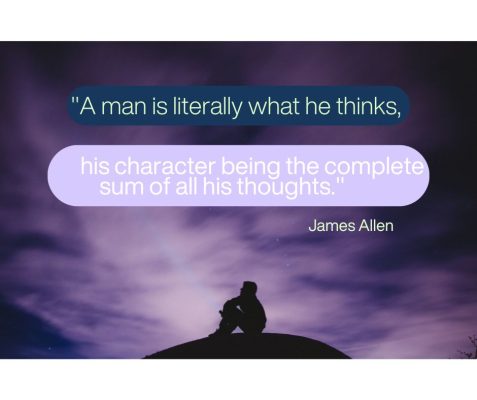
The book begins with a fundamental assertion: “A man is literally what he thinks, his character being the complete sum of all his thoughts.” Allen believes that our thoughts form the basis of who we are and ultimately shape our actions and circumstances. A person’s character, habits, and actions are simply the manifestation of their most dominant thoughts. If an individual harbours positive, constructive thoughts, they are likely to lead a life characterised by success, health, and harmony. Conversely, negative and destructive thoughts lead to poor health, failure, and unhappiness.
Through the cultivation of right thinking, individuals can transform themselves, their circumstances, and even their entire life trajectory. Allen writes, “As the reaper of the harvests, so does the man sow the seeds of his thoughts, and in the fullness of time, the fruit of his thoughts will be harvested.” He likens the mind to a garden, where thoughts are the seeds, and the character is the harvest. In essence, by tending to one’s thoughts and making them positive, pure, and purposeful, a person can cultivate a life that reflects these traits.
Thought and Character
A recurring theme in Allen’s book is the inextricable link between thought and character. He suggests that an individual’s outer circumstances—be they wealth, health, or success—are merely a reflection of their inner mental state. One’s character is built over time by repeated thoughts. For instance, if a person consistently thinks in a way that is generous, kind, and loving, these qualities will gradually shape their character, leading them to engage in actions that align with those thoughts.
Allen asserts that individuals can change their character by consciously altering their thoughts. He writes, “Man is made or unmade by his own thoughts.” The power to become a better, more refined individual lies not in external forces, but in the thoughts one chooses to cultivate. If a person’s thoughts are focused on self-doubt or negativity, these will naturally shape their character into one of weakness. On the other hand, thoughts of self-confidence, ambition, and love will produce a strong, virtuous character capable of overcoming adversity.
Effect of Thought on Health and Body
Allen expands on the idea that thoughts have a direct impact on a person’s physical well-being. He argues that mental states can lead to both physical health and illness. For example, the thoughts of stress, worry, and anxiety often result in physical ailments such as headaches, digestive issues, and fatigue. Conversely, a mind at peace, free from destructive emotions, fosters a healthy and vibrant body.
The mind and body are interconnected, Allen insists, and through mental discipline, individuals can prevent or overcome illness. He highlights the importance of cultivating thoughts of vitality, strength, and wellness in order to enjoy physical health. It is a radical idea, suggesting that an individual has the power to influence their own health through conscious thought.
Thought and Achievement
Another key message in the book is the connection between thought and achievement. Allen argues that success is not a matter of chance or circumstance but the result of mental clarity, purpose, and focus. Great achievements, whether in business, art, or personal development, are the outcome of persistent thought and effort. A person who thinks continually about their goals, cultivates a positive mindset, and takes decisive action will inevitably experience success.
Moreover, Allen notes that success is not just about external accomplishments but also about inner peace and satisfaction. True success, in his view, is a balance of external achievement and inner harmony, which arises from a disciplined mind.
Self-Control and the Role of Discipline
Allen believes that discipline is essential for personal growth. The mind is prone to distractions, negative influences, and idle thoughts. Without the practice of self-control, the mind can become chaotic, and a person can find themselves living a life of reaction rather than creation. The key to mastering one’s life is to master the mind. Allen writes that “Self-control is strength; right thought is mastery; calmness is power.”
By exercising mental discipline, an individual can control their thoughts and, as a result, their actions. He compares the mind to a ship, suggesting that a ship without a captain is at the mercy of the winds, while a captain can steer the ship toward a desired destination. Similarly, a person who lacks control over their thoughts is subject to the whims of external circumstances, whereas one who has mastered their thoughts has the ability to chart their own course in life.
The Role of Purpose
Purpose is another key theme that Allen addresses. He believes that every individual must have a clear and meaningful purpose in life. This purpose serves as the guiding force behind one’s thoughts and actions. Without a defined purpose, a person’s thoughts may lack direction, leading to wasted time and effort. On the other hand, a strong sense of purpose gives clarity and focus to the mind, allowing the individual to achieve their goals and live a fulfilling life.
Allen writes, “He who has a why to live can bear almost any how.” This suggests that having a compelling reason for living, a clear goal or purpose, provides the strength to overcome adversity and achieve greatness. Purpose is the fuel that drives the engine of progress.
The Law of Attraction and the Power of Thoughts
In addition to personal responsibility, Allen introduces the idea that the universe responds to the vibrations emitted by our thoughts. While this concept wasn’t named “The Law of Attraction” in Allen’s time, it aligns with the principles later popularised by this law. He implies that by thinking positive and purposeful thoughts, individuals align themselves with positive energy, thus attracting success, happiness, and prosperity into their lives.
He also alludes to the idea that negative thoughts can attract undesirable circumstances, suggesting that our internal state sends out a kind of signal that influences the external world.
Conclusion
In conclusion, As a Man Thinketh is a profound meditation on the power of thought and its influence on every aspect of life. James Allen reminds readers that their thoughts are not only within their control but also the key to unlocking their potential. By cultivating positive, purposeful, and disciplined thoughts, individuals can achieve health, success, and personal fulfilment. The book urges readers to take responsibility for their mental states and, by doing so, to transform their lives.
Allen’s work is both practical and inspirational, offering a philosophy that is simple yet deeply transformative. His message is clear: our lives are shaped by our thoughts, and by changing our thoughts, we have the power to change our destiny.
Search
Latest Posts

Healing the Inner Child: Why Emotional Patterns Form — and How Hypnotherapy Helps
January 16, 2026
No Comments